AI Data Center Backlash: Why Voters Said No in 2026
US voters sided against AI data centers in 40 of 41 local midterm ballots. Why the backlash grew, how OpenAI and Google replied, and what comes next.
TL;DR
On 3 November 2026, US voters decided 41 local ballot measures about data centers in 10 states and sided against data centers in all but one, according to Ballotpedia data reported by CNBC. Governors who promised to pause or regulate new AI data centers also won in Texas, Ohio and Georgia. Two days later OpenAI promised to stop asking officials to sign secrecy deals and to publish water, energy and noise data, while Google pledged to pay for all the power its new Wyoming campus uses.
Key takeaways
- 41 local data center measures in 10 states were on the ballot on 3 November 2026; voters went against data centers in every one except Harwood, North Dakota (Ballotpedia, via CNBC and Scientific American).
- Ohio held 21 of the 41 measures, and all 13 Ohio jurisdictions voting on bans were on track to pass them, Renewable Energy World reported.
- In a CNBC Voter Poll, 56% of voters said data centers were a crucial or major factor in how they voted.
- OpenAI's Compute Campus Policy Blueprint (November 2026) says it will not require public officials to sign NDAs, outside narrow exceptions, and will publish site-level noise, energy and water data.
- Google announced a $17 billion data center in Laramie County, Wyoming on 5 November 2026, saying it will be air-cooled and that Google will pay for 100% of the power it uses.
The AI data center backlash reached the ballot box this week. In the US midterm elections on 3 November 2026, voters in 10 states decided 41 local questions about data centers, and in all but one they chose the option that slows, limits or blocks them. This post explains what happened, why people are pushing back, how OpenAI and Google responded within days, and what it means if you build with AI.
What happened in the 2026 midterms?
Ballotpedia tracked the measures and CNBC analysed the results. The headline numbers:
- 41 local data center measures in 10 states were on the ballot. Ohio alone had 21.
- Voters sided against data centers in every measure except one. The exception was Harwood, North Dakota, where voters rejected, by about three to one, a proposal to add extra review for industrial projects. Scientific American notes that a $3 billion data center is under construction near the city.
- The measures ranged from outright bans to pauses ("moratoriums") and advisory votes telling local officials what residents want.
Some local results stand out. Scientific American reports that more than 80% of voters in Wells, Maine approved a 180-day moratorium. According to Renewable Energy World, all 13 Ohio jurisdictions voting on bans were on track to pass them, and more than 80% of voters in Ashville, Ohio rejected a data center already under construction. Several Kansas towns, including Emporia, banned large data centers.
The issue mattered in bigger races too. In a CNBC Voter Poll, 56% of voters said data centers were a crucial or major factor in their decision. Democrats who campaigned on pausing or regulating new projects won governorships:
| State | Governor-elect | Data center position (as reported) |
|---|---|---|
| Texas | Gina Hinojosa | Immediate moratorium until the Legislature meets in January |
| Ohio | Amy Acton | "Conditional" moratorium, including data centers covering 100% of utility costs |
| Georgia | Keisha Lance Bottoms | Pause new development by executive order and review tax incentives |
In New York, re-elected Governor Kathy Hochul already has an executive order pausing hyperscale projects over 50 megawatts for up to a year, starting 14 July 2026, Renewable Energy World reports.
What is an AI data center, and why is it different?
A data center is a building full of computers that store data and run online services. An AI data center is packed with graphics chips (GPUs), which are very good at the maths AI models need but use a lot of electricity and produce a lot of heat. Our 30-second why GPUs reel shows why AI runs on these chips.
The newest AI sites are huge. Google's new campus in Wyoming will draw on a natural gas fuel cell project rated at 702 megawatts, according to Google, and the site's original developer planned to grow it to 10 gigawatts eventually, TechCrunch reports. That is the scale of a power station, not an office building.
OpenAI now calls these sites compute campuses. In its blueprint, a compute campus is an AI training data center, which OpenAI argues is unlike the data centers behind web search or email because of its scale and the jobs it needs.
Why are voters turning against data centers?
The same four worries come up again and again, including in OpenAI's own list of what communities want answered:
- Electricity bills. Renewable Energy World ties the opposition to rising power prices and uncertainty about who pays for new grid equipment. If a utility builds new lines for a data center, everyone's bill can go up unless the data center pays its own way.
- Water. Many data centers use water to cool their chips. In dry regions, residents fear competition for a scarce supply.
- Noise and roads. Big sites bring construction traffic and equipment noise, and residents want to know what daily life will be like next door.
- Secrecy. Some local officials were asked to sign non-disclosure agreements (NDAs), contracts that stop them telling residents what is planned. OpenAI's own blueprint says officials should not have to sign NDAs that stop them sharing essential information with their constituents.
Not everyone sees it that way. Dan Diorio of the Data Center Coalition, an industry group, warned that communities could lose tax revenue and payments from tech companies, Renewable Energy World reports.
How did OpenAI and Google respond?
Both companies moved within days of the vote.
OpenAI published AI Infrastructure That Works for America: Our Compute Campus Policy Blueprint. For campuses it owns and operates, OpenAI says:
- it voided NDAs in Effingham County, Georgia, in July, and will not require any public official to sign one in future, apart from narrow cases covering security, trade secrets or competitively sensitive information;
- it will publish site-specific noise, energy and water data on its website;
- its Effingham campus will use a closed-loop water system, which recirculates water like a car radiator instead of constantly drawing fresh water;
- it has an agreement with Georgia Power to pay the full cost of the grid infrastructure needed to serve that campus.
OpenAI also asks lawmakers to make these rules apply to every developer: ban NDAs for officials, require large electricity users to pay the extra costs they create, and make tax-incentive deals public, with clawbacks if promises are not kept.
Google announced a $17 billion data center in Laramie County, near Cheyenne, Wyoming, on 5 November. Google says the facility will be air-cooled to reduce strain on local water, that it will pay for 100% of the power it uses, and that part of that power will come from natural gas fuel cells paired with carbon capture. A day later, the developer Crusoe confirmed that it had sold the unfinished Wyoming project to Google. TechCrunch notes Google had reportedly raised concerns about the project's cost and timeline under Crusoe.
Why does the AI data center backlash matter?
AI runs on physical infrastructure, and that infrastructure needs local permission. If permission gets harder, new computing capacity arrives more slowly. Renewable Energy World cites analysts who say projects already under construction or permitted are likely to go ahead, while early-stage projects will face more friction. It also reports a Goldman Sachs estimate that 45% of planned US data center capacity could be at risk.
For the industry, the lesson is that "trust us" no longer works. Clear numbers on power, water and noise, paid for by the developer, look set to become the price of approval. The same questions about power, water and openness apply wherever large AI data centers are planned, not just in the US.
What should you do?
- If you are a resident: read your local planning agenda. Ask any developer three questions: who pays for new grid equipment, how the site is cooled, and what will be published about noise and water.
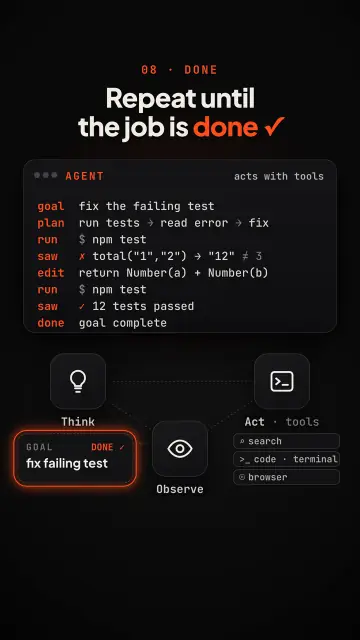
- If you are a developer or student: AI capacity is not unlimited. Learn to make models and agents efficient: smaller models, caching and fewer wasted calls. Our AI agents reel shows how an agent loops, and every loop costs compute.
- If you run a business that relies on AI: don't build plans that assume compute will keep getting cheaper and more plentiful every quarter. Keep a fallback model and track your usage.
- If you work in policy or energy: ratepayer protection, water reporting and incentive transparency are now mainstream asks, even from AI companies themselves.
Want help building AI tools that are useful without wasting compute? Start a project with byagents.
Researched and drafted with AI agents by byagents, fact-checked against the sources above. Edited by Yashvanth S.
Frequently asked questions
What is the AI data center backlash?
The AI data center backlash is growing local opposition to the huge computing facilities that train and run AI models. Residents worry about electricity bills, water, noise, and deals made in secret. In the November 2026 US midterms it showed up at the ballot box, with voters backing bans, pauses and restrictions almost everywhere they were asked.
How many data center ballot measures were there in the 2026 midterms?
Ballotpedia counted 41 local data center measures across 10 states on 3 November 2026, with 21 of them in Ohio. Voters sided against data centers in all of them except one in Harwood, North Dakota, where they rejected extra review of industrial projects.
Why do people oppose AI data centers?
The most common worries are higher electricity bills, pressure on local water, noise, and a lack of transparency. Some officials were asked to sign non-disclosure agreements, so residents could not learn what was being planned. OpenAI's own blueprint lists electricity bills, water supply, roads and quality of life as the questions communities want answered.
What is a compute campus?
A compute campus is OpenAI's name for a very large AI data center, especially one used to train AI models. OpenAI argues these are different from ordinary data centers because of their scale and the construction and operations jobs they create. OpenAI says it wants communities to see them as long-term economic projects rather than simple storage buildings.
Will the backlash stop AI data centers being built?
Not entirely. Analysts quoted by Renewable Energy World expect projects already under construction or permitted to go ahead, while early-stage projects face more friction. Companies are also changing how they build, for example air cooling in Wyoming and a closed-loop water system in Effingham County, Georgia.
Sources
- Voters rebuff data centers in every ballot measure except one during the 2026 midterms, CNBC, 4 November 2026
- 2026 election results show widespread opposition to AI data centers, Scientific American, 4 November 2026
- Voters overwhelmingly rejected data centers in the midterms – here's where developers will have a tough time, Renewable Energy World, 6 November 2026
- AI Infrastructure That Works for America: Our Compute Campus Policy Blueprint, OpenAI, 5 November 2026
- Investing in Wyoming’s infrastructure, energy and workforce, Google, 5 November 2026
- Crusoe sells troubled Wyoming data center project to Google, TechCrunch, 6 November 2026
Researched and drafted with AI agents, fact-checked against the sources above, and reviewed by Yashvanth S.