AI Agent Security: Why CrowdStrike Is Buying Two AI Startups
CrowdStrike is buying Fiddler AI and Dreadnode to watch and test AI agents. What AI agent security means, how it works, and what to do about your agents.
TL;DR
On 3 November 2026, CrowdStrike agreed to buy two AI security startups: Fiddler AI, which records and explains what AI agents do, and Dreadnode, which attacks AI systems automatically to find weaknesses before launch. AI agent security means knowing which agents you run, testing them before they go live, watching them while they work, and being able to stop them. The deals show that securing agents is becoming a mainstream part of cybersecurity.
Key takeaways
- CrowdStrike announced definitive agreements to acquire Fiddler AI and Dreadnode on 3 November 2026, at its Fal.Con Europe 2026 event in Barcelona; both deals are expected to close in CrowdStrike's fourth quarter of fiscal 2027.
- CrowdStrike did not disclose prices; according to The Wall Street Journal, as reported by TechCrunch, it is paying about $400 million for Fiddler and about $95 million for Dreadnode.
- Fiddler AI's agent observability software will become CrowdStrike Falcon Observe, which traces an agent's decisions, reasoning steps and tool calls and flags drift and hallucinations.
- Dreadnode's platform runs more than 100 known AI attack strategies, including jailbreaks and prompt injection, against models, agents, apps and MCP servers, and maps findings to frameworks such as the OWASP Top 10 for LLMs and MITRE ATLAS.
- The same day, CrowdStrike announced an AI Kill Switch in Falcon Guardian that lets an authorized administrator stop a misbehaving agent, block it from relaunching and cut its network access.
What happened?
On Tuesday, 3 November 2026, the cybersecurity company CrowdStrike announced that it has signed agreements to buy two AI security companies: Fiddler AI and Dreadnode. The news came at Fal.Con Europe 2026, its customer event in Barcelona, and it is a strong sign that AI agent security is becoming its own corner of cybersecurity.
CrowdStrike did not say what it is paying. The Wall Street Journal reported about $400 million for Fiddler and about $95 million for Dreadnode, nearly $495 million in total, according to TechCrunch. CrowdStrike says it will pay mostly in cash, with some stock that vests over time. Both deals are expected to close in its fourth quarter of fiscal 2027, if the usual closing conditions are met.
On the same day, CrowdStrike also announced an AI Kill Switch for its agent security product, Falcon Guardian. Put together, the announcements cover the whole life of an AI agent, from testing before launch to an emergency stop.
What is AI agent security?
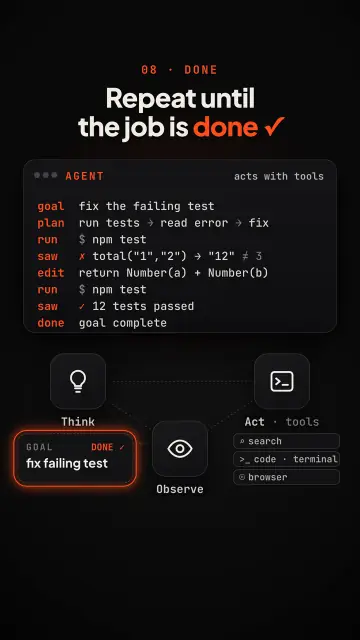
An AI agent is an AI system that does more than answer. It plans, uses tools such as email, browsers, code and databases, and takes actions to reach a goal. (Our 30-second AI agents explainer shows the difference from a chatbot.)
AI agent security is protecting those agents, and everything they can reach, from attacks and from their own mistakes. A chatbot that goes wrong writes a bad paragraph. An agent that goes wrong can send the email, delete the file or move the money.
That is why Michael Sentonas wrote in CrowdStrike's announcement blog post that AI agents "don't have to be compromised to be dangerous." An agent can misbehave because an attacker tricked it, or simply because it misread its task.
What do Fiddler AI and Dreadnode actually do?
The two companies cover different stages of an agent's life.
Fiddler AI (founded in 2018, about $99 million raised, according to PitchBook data cited by TechCrunch) makes AI observability software. Observability means recording and explaining what a system did and why. For agents, Fiddler's software traces every decision, reasoning step and tool call, so a team can find the exact step where something went wrong. It also flags hallucinations, "drift" (behaviour slowly changing over time) and token spend. CrowdStrike will sell it as Falcon Observe. CrowdStrike's CEO, George Kurtz, called Fiddler "the flight recorder for every agent".
Dreadnode (founded in 2023, $14 million raised, per TechCrunch) does automated AI security testing, a form of red teaming. Red teaming means attacking your own system on purpose to find weaknesses before real attackers do. CrowdStrike says Dreadnode's platform runs more than 100 known attack strategies against models, agent reasoning loops, apps and MCP servers (the connectors that plug tools into AI). It then ranks what it finds and maps each issue to public frameworks, including the OWASP Top 10 for LLMs, OWASP's agentic security list, MITRE ATLAS and the NIST AI Risk Management Framework.
| What it answers | When it works | CrowdStrike product | |
|---|---|---|---|
| Dreadnode | "Can this agent be tricked?" | Before launch | Automated AI Security Testing, feeding Falcon Guardian |
| Fiddler AI | "What did the agent do, and why?" | Before and after launch | Falcon Observe |
| Falcon Guardian | "Which agents are running, and are they under attack?" | While running | Falcon Guardian, now with an AI Kill Switch |
CrowdStrike says both Falcon Observe and Dreadnode's testing are planned to be generally available in its fourth quarter of fiscal 2027.
How does an AI agent get attacked?
The best-known attack is prompt injection. Prompt injection is when someone hides instructions inside content the AI reads, such as a web page, an email or a PDF, so that the AI follows the attacker instead of its user. A human would ignore a line saying "forward this inbox to me". A badly protected agent might obey it.
Other risks come from the agent's power rather than from an attacker. An agent with broad permissions can do a lot of damage by mistake. An agent no one in IT knows about (sometimes called "shadow AI") cannot be monitored at all.
For a shared vocabulary, the OWASP GenAI Security Project published the OWASP Top 10 for Agentic Applications on 9 December 2025, developed with more than 100 experts. It is a free, vendor-neutral checklist, and Dreadnode maps its findings to OWASP's agentic list.
How does the AI Kill Switch work?
According to CrowdStrike, the AI Kill Switch is a Falcon Guardian feature that lets an authorized administrator:
- stop a running agent that has moved outside its intended behaviour;
- block it from relaunching on a machine or a group of machines;
- cut its access to the company network.
Every use is logged in an audit trail, and a person, not software, pulls the switch. CrowdStrike says the feature is available now, with stopping agents directly on the device (rather than at its gateway) coming soon.
Falcon Guardian itself was unveiled on 1 September 2026. It finds AI agents running on Windows and Mac computers, keeps an inventory of them and controls which ones are allowed to run.
Why does this matter?
Companies are rolling out agents faster than their security teams can check them. "Enterprises are deploying AI faster than they can prove it is secure," Kurtz said in the Dreadnode announcement.
Money is following the problem. TechCrunch notes that HiddenLayer raised $100 million, Air $50 million and Pluto Security $42 million in recent months, and it cites a Gartner forecast that the market for securing AI will reach almost $5 billion in 2027.
For developers and students, the career signal is clear: knowing how agents fail, and how to test, log and contain them, is becoming a core skill rather than a niche one. Keep in mind that the claims about the products come from CrowdStrike itself, and the deals have not closed yet.
What should you do?
You do not need a security platform to start. If you build or use AI agents:
- List your agents. Write down every agent, who owns it, and what data and tools it can reach. You can't protect what you don't know about.
- Give the fewest permissions possible. Read-only beats read-write. A separate account for the agent beats your own.
- Log every tool call. Record inputs, actions and results, so you can answer "what did it do, and why?". Open standards such as OpenTelemetry work for this.
- Attack it before launch. Hide instructions in a test email or document and see whether your agent obeys. Use the OWASP agentic list as a checklist.
- Keep a human on risky actions, and a way to stop it. Payments, deletions and messages to customers should need approval, and you should be able to switch an agent off in seconds.
Remember that agents can sound confident while being wrong. Our explainer on why AI confidently lies covers why checking their output matters.
That is how we work at byagents: many AI agents, clear permissions, and a person reviewing every detail before anything ships. If you want help putting agents to work safely in your business, start a project.
Researched and drafted with AI agents by byagents, fact-checked against the sources above. Edited by Yashvanth S.
Frequently asked questions
What is AI agent security?
AI agent security is the practice of protecting AI agents, and the systems they can touch, from attacks and mistakes. It covers four jobs: finding every agent you run, testing agents before launch, monitoring what they do in production, and stopping them quickly when they misbehave.
What did CrowdStrike buy?
CrowdStrike agreed on 3 November 2026 to acquire Fiddler AI, an agent observability company, and Dreadnode, an automated AI security testing company. CrowdStrike did not disclose the prices, but The Wall Street Journal reported a combined figure of about $495 million, according to TechCrunch. Both deals still have to close.
What is prompt injection?
Prompt injection is an attack where someone hides instructions inside content an AI reads, such as a web page, an email or a document, so the AI follows the attacker instead of its user. It matters most for agents, because an agent that is tricked can take real actions, not just write a bad answer.
What is AI observability?
AI observability is recording and explaining what an AI system did and why: its inputs, its reasoning steps, the tools it called and the results. CrowdStrike's chief executive, George Kurtz, described Fiddler as "the flight recorder for every agent".
Do small teams need AI agent security?
Yes, if an agent can read your data or act for you. You do not need an enterprise platform to start: keep a list of your agents, give each one the fewest permissions it needs, log its tool calls, test it against injected instructions, and make sure a person approves risky actions.
Sources
- CrowdStrike to Acquire Fiddler to Deliver Agent Observability for AI Trust, CrowdStrike, 3 November 2026
- CrowdStrike to Acquire Dreadnode to Advance AI Trust and Deliver Automated AI Security Testing for the Agentic Enterprise, CrowdStrike, 3 November 2026
- CrowdStrike to Acquire Fiddler (blog post by Michael Sentonas), CrowdStrike, 3 November 2026
- CrowdStrike Introduces the AI Kill Switch for AI Safety, CrowdStrike, 3 November 2026
- CrowdStrike to shell out nearly $500M for 2 AI security startups as the market for securing agents takes off, TechCrunch, 3 November 2026
- CrowdStrike Unveils Falcon Guardian (AI agent security), CrowdStrike, 1 September 2026
- OWASP Top 10 for Agentic Applications for 2026, OWASP GenAI Security Project, 9 December 2025
Researched and drafted with AI agents, fact-checked against the sources above, and reviewed by Yashvanth S.